✓
A real diagnosis, not a guess
We locate the entry point by checking common leak paths: penetrations, flashing transitions, valleys, and fastener lines. The repair plan is based on what failed, not on where the stain appeared.
Serving Jacksonville, Florida & surrounding areas
Stop leaks fast, protect your home after storms, and get a clear written scope before any work starts. Our crew repairs shingle and flat roofs across Jacksonville with straightforward pricing and workmanship you can inspect.
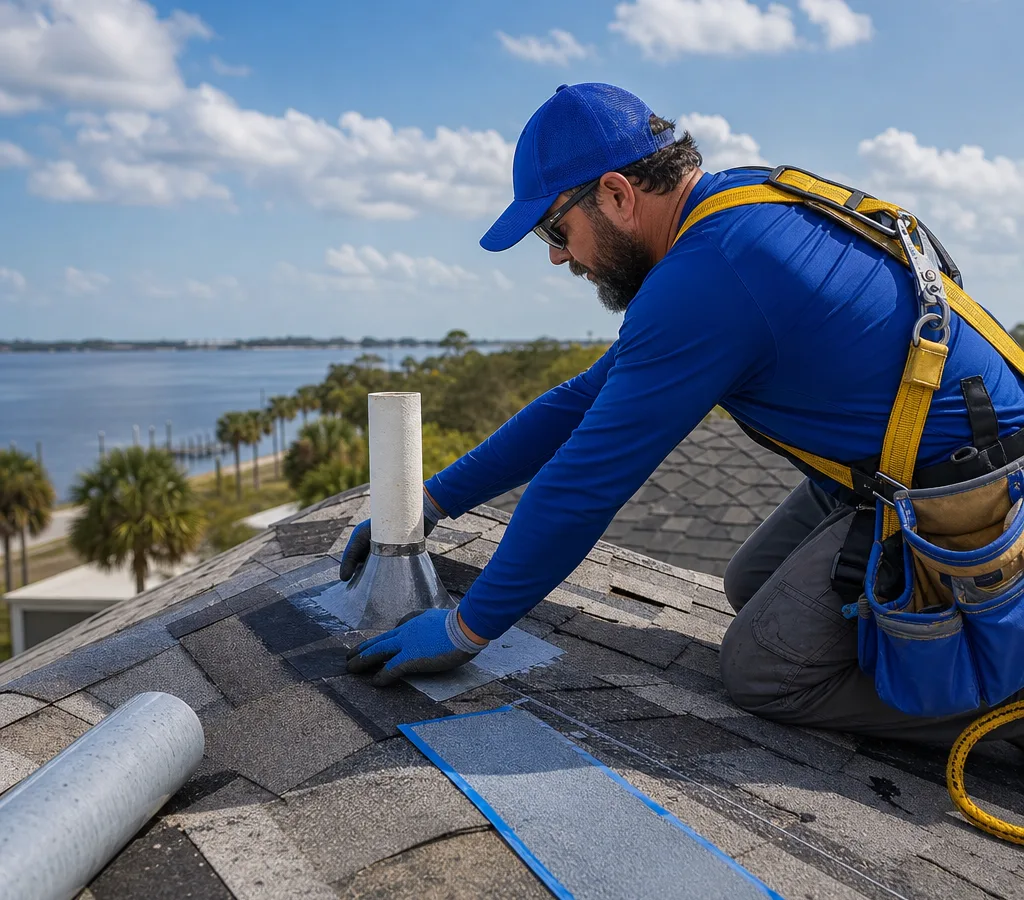
If you are searching for roof repairs Jacksonville homeowners can trust, you are usually dealing with one of three problems: a leak that is showing up inside, storm damage that needs to be documented and stabilized, or slow wear that finally turned into a failure point.
Jacksonville weather makes small issues turn into bigger ones. Wind-driven rain can work under lifted shingles, and summer heat bakes sealant and pipe boot rubber until it cracks. On many homes, the leak spot you see on a ceiling is not directly under the roof entry point. Water often follows decking seams, nails, or a rafter bay before it shows up.
Roofing Contractor Jacksonville Florida focuses on repairs that solve the cause, not the symptom. That means tracing the entry point, correcting the detail that failed, and confirming the area is watertight before we wrap up.
Across Jacksonville we commonly repair:
If you are also comparing contractors, focus on repair documentation, safety practices, and whether you get a written scope you can keep.
We locate the entry point by checking common leak paths: penetrations, flashing transitions, valleys, and fastener lines. The repair plan is based on what failed, not on where the stain appeared.
Asphalt shingles, modified bitumen, and other low-slope systems fail in different ways. Materials and fastening details need to match the roof so the patch does not create a new weak spot.
You should know what was repaired, what materials were used, and what areas were inspected. When it is useful, we provide photos so you can see the problem area without getting on the roof.
Repairs often touch flashing, vents, and ridge or hip caps. We take care not to break surrounding shingles or disturb intact seal lines while accessing the repair zone.
Sometimes a targeted repair is the right call. Sometimes the same detail is failing across multiple locations. We will explain what we see so you can decide with facts.
Most roof leaks come from transitions and penetrations, not from the open field of the roof.
Pipe boots and vent penetrations: The rubber collar around plumbing vents can crack with sun exposure, or the flange can loosen. A correct repair typically involves replacing the boot or rebuilding the seal, then tying shingles or membrane back in so water sheds naturally.
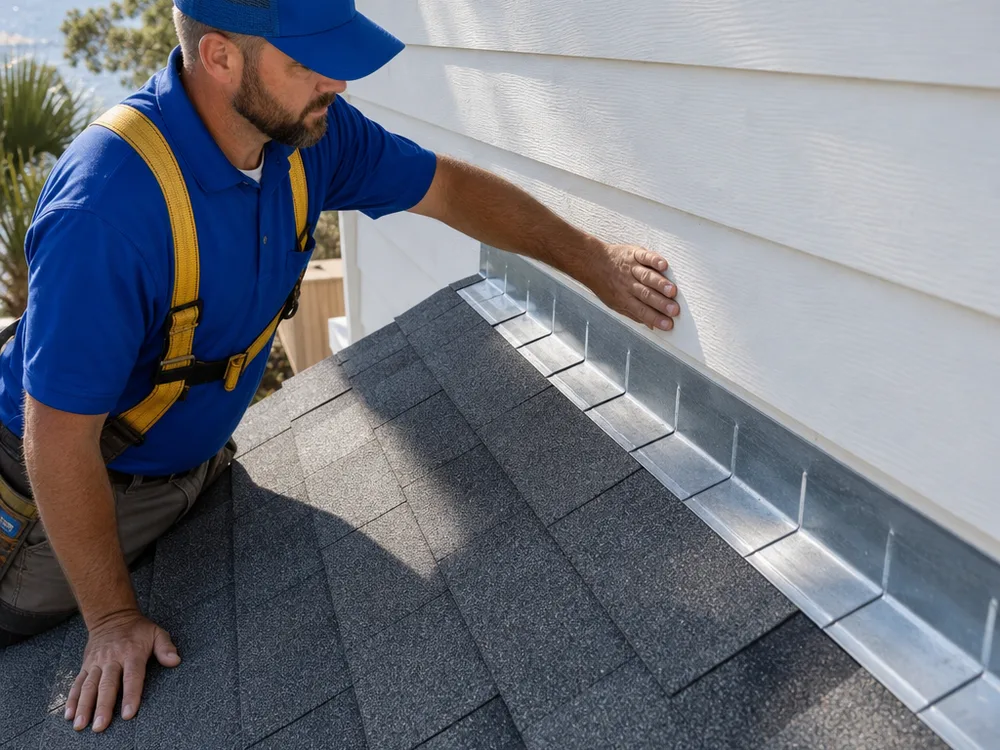
Flashing at walls and chimneys: Step flashing, counterflashing, and kick-out flashing details control water where roof planes meet vertical walls. When these pieces are missing, nailed incorrectly, or sealed as a shortcut, leaks show up during heavy rain. We repair by correcting the metal flashing detail first, then restoring the surrounding roof material.
Valleys: Valleys collect runoff and debris. On shingle roofs, we look for nail placement issues, worn valley metal, or shingle edges that are channeling water the wrong way.
Fastener and seal failures on low-slope roofs: Flat and low-slope roofs can leak at seams, terminations, and around curbs and drains. Repairs often involve cleaning and prepping the area properly, then applying the manufacturer-appropriate patch method without mixing incompatible products.
Local note: Homes near the Intracoastal and along the St. Johns River corridor often see more wind and wind-driven rain exposure. That makes edge details, flashing, and shingle sealing especially important during any roof repair in Jacksonville FL.
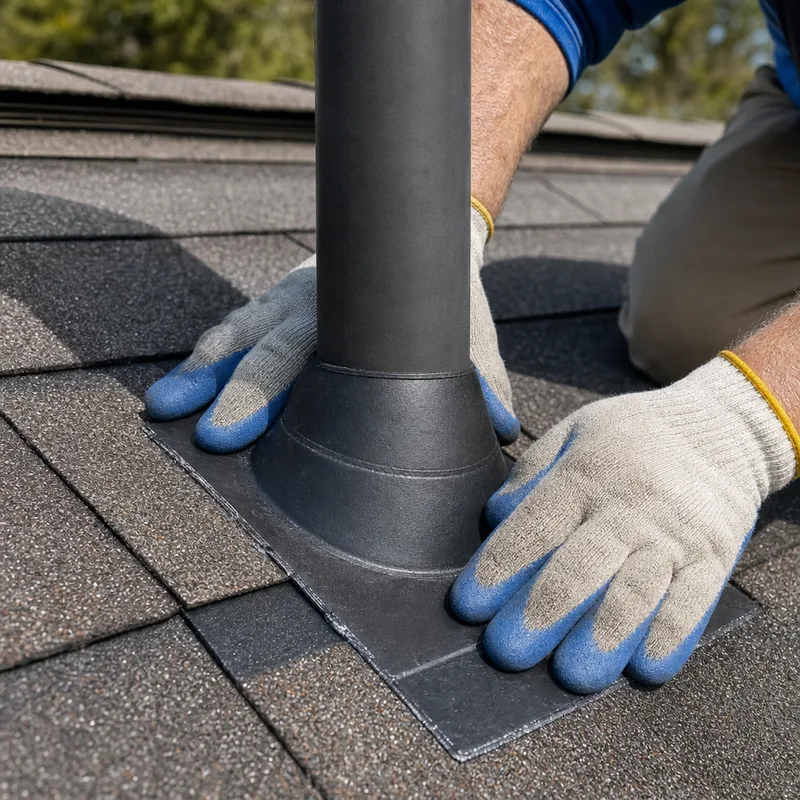
From tracing the leak to documenting the completed repair, each step is focused on correcting the failure point and protecting the surrounding roof.
We start at the reported problem area, then inspect uphill and around nearby penetrations, flashing, and valleys. If needed, we also look in the attic for water tracks, wet decking, or daylight at penetrations.
You get a clear scope that explains what failed and what we recommend. When there is more than one reasonable approach, we outline the tradeoffs so you can choose.
We protect landscaping and access areas, then complete the repair using materials compatible with the roof system. Surrounding shingles or membrane are re-seated and sealed the right way so water sheds over the repair.
Before we leave, we confirm the repaired detail is secure and the area is cleaned up. When it is helpful for your records, we provide photos of the repair area and notes on what was addressed.
Most roof repair in Jacksonville, FL typically ranges from about $250 to $1,500, depending on the roof type and what failed. A small shingle repair or vent boot replacement is often on the low end, while flashing rebuilds, multiple leak points, or low-slope seam work can run higher.
Price changes with access and pitch, the number of repair areas, matching materials, and whether decking or underlayment is damaged under the surface. The exact cost is confirmed after an on-roof inspection and a written scope.
For an active leak, we prioritize getting eyes on the roof quickly so the entry point can be stabilized and the repair scope can be confirmed. Timing depends on weather and workload, but leak situations are treated as urgent because interior damage can spread fast in humid conditions.
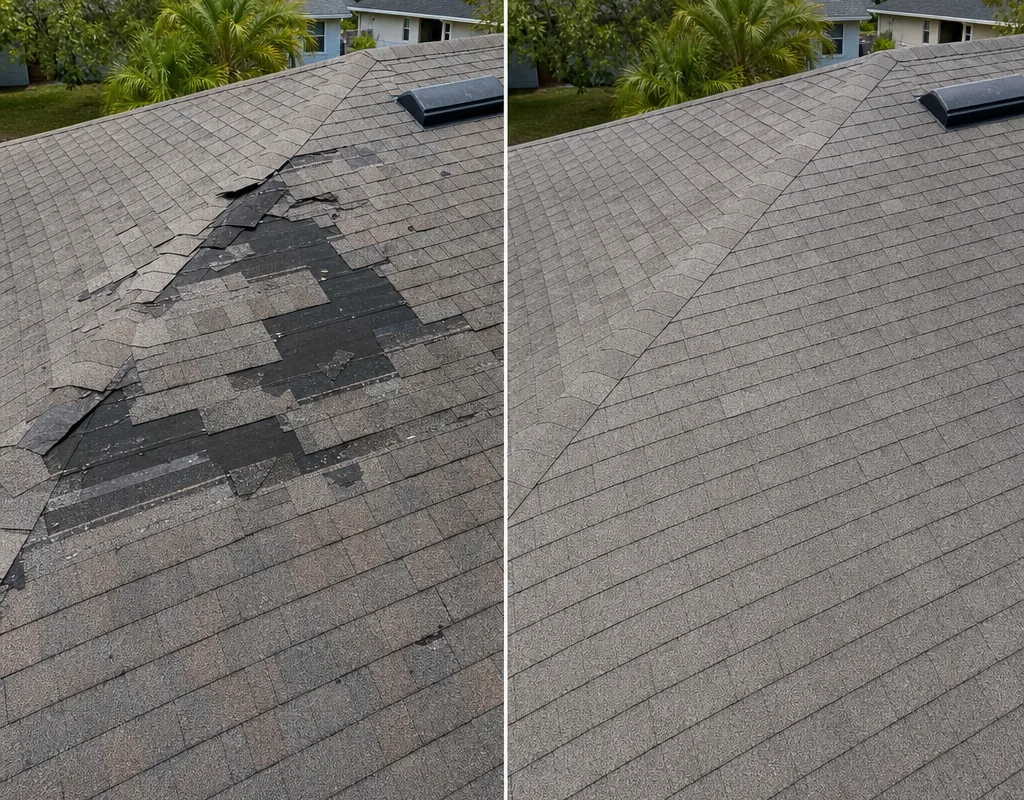
Many storm issues can be repaired if the damage is localized and the surrounding roof system is still in good condition. During the inspection we check for creased shingles, lifted edges, exposed fasteners, and flashing failures, then tell you whether a targeted repair is realistic or if the roof has widespread problems.
We most often find leaks at penetrations such as pipe boots and vents, flashing transitions at walls and chimneys, valleys where water concentrates, and low-slope seams and terminations. Wind-driven rain and heat accelerate failures at these details, especially when older sealants or rubber components break down.
We do our best to match shingle color and profile, but perfect matches are not always possible on older roofs because manufacturers change colors and sun exposure fades the existing field. When a close match is not available, we will explain options such as using salvage shingles when appropriate or placing the best match in the least noticeable area.
Repairs can be done during wetter periods, but the roof surface has to be safe to work and suitable for the repair method. Many materials require dry, properly prepped surfaces to adhere correctly, so we may schedule around storms or use temporary stabilization until conditions allow the permanent repair.
Move valuables away from the leak area and use a bucket to control water, then note where the dripping is occurring and whether it changes with wind direction or rain intensity. If it is safe, take photos of any interior staining or active dripping for your records; then get a professional inspection to trace the roof entry point and stop the source.
Yes, we handle repairs on both shingle roofs and flat or low-slope systems, and the repair method is chosen based on the roof type and failure point. Low-slope repairs commonly involve seam and termination work, penetration flashing, and careful surface prep so the patch bonds correctly.
Tell us what you are seeing and when it started. We will inspect the roof, explain the cause in plain language, and provide a written plan for the repair so you can move forward with confidence.