✓
Active leaks and ceiling water spots
We trace the leak source, not just the interior stain, then stabilize the roof with targeted sealing, shingle replacement, or tarping depending on conditions.
Serving Jacksonville, Florida & surrounding areas
When a storm or sudden leak hits, fast action matters. Our crews respond quickly to stop active water intrusion, secure loose materials, and stabilize your roof so you can protect the inside of your home while planning the permanent fix.
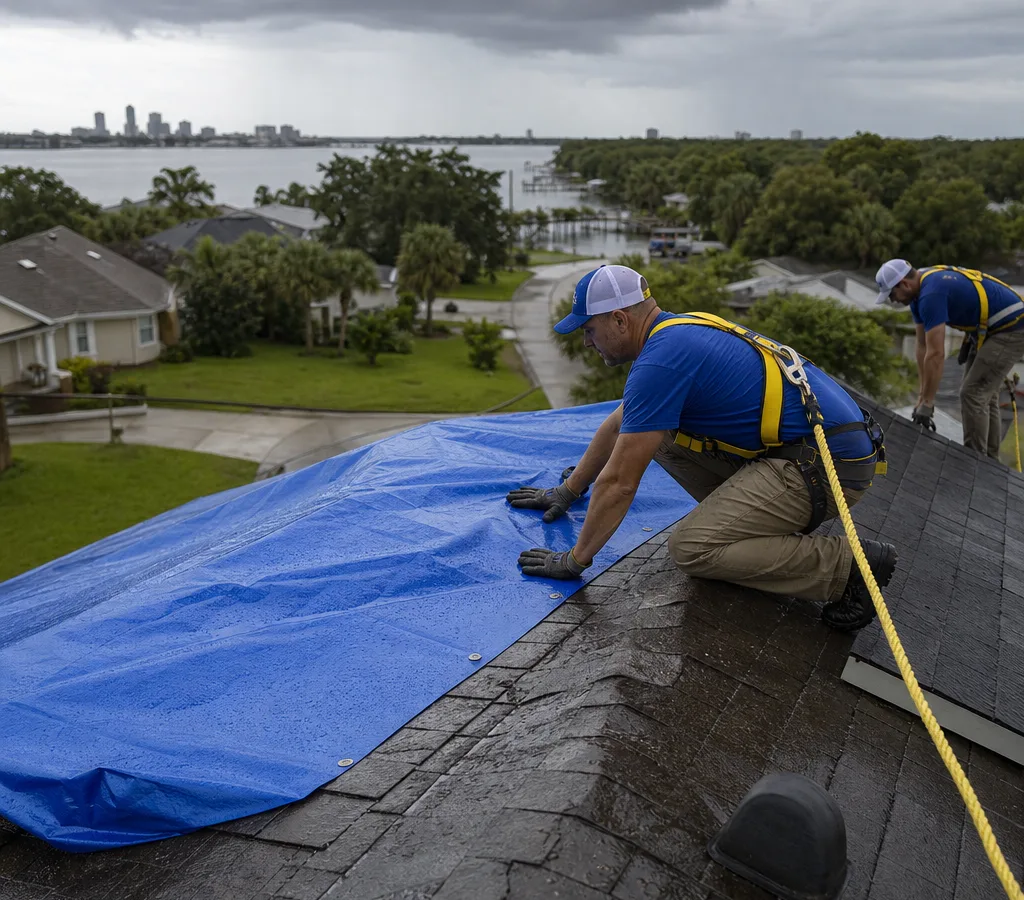
If you found water on the ceiling, heard shingles lifting in the wind, or spotted a tree limb on the roof, you're already in an emergency. Emergency roof repair Jacksonville FL work is about controlling damage first: stopping the leak, keeping wind-driven rain out, and preventing a small problem from turning into soaked insulation, stained drywall, or mold.
Roofing Contractor Jacksonville Florida handles urgent roof issues across Jacksonville, including situations that happen after thunderstorms and tropical systems when water finds the weakest point fast. We focus on safe access, clear documentation of what failed, and a practical plan for next steps. If the roof can be stabilized during the same visit, we do it. If conditions are unsafe—such as lightning, active winds, or a compromised deck—we'll explain what can be done immediately and what needs to wait until it's safe.
Many urgent calls come from common failure points: missing ridge caps, lifted shingle tabs, punctures from wind-borne debris, pipe boot splits, failing flashing at walls and chimneys, and leaks at valleys where water concentrates. The goal is simple: dry in the structure and buy you time to make the right repair decision.
A real emergency response is more than “patch and go.” We start with a quick safety and access check, then locate the entry point. In Florida rain, the stain you see inside often isn't directly under the exterior failure. We trace water paths around decking seams, underlayment laps, valleys, and flashing.
Typical same-visit stabilization measures include:
You'll get a clear explanation of what failed, what we did to stop the leak, and what the permanent repair is likely to involve. We identify whether you're dealing with a simple flashing issue or a larger roof-system problem.
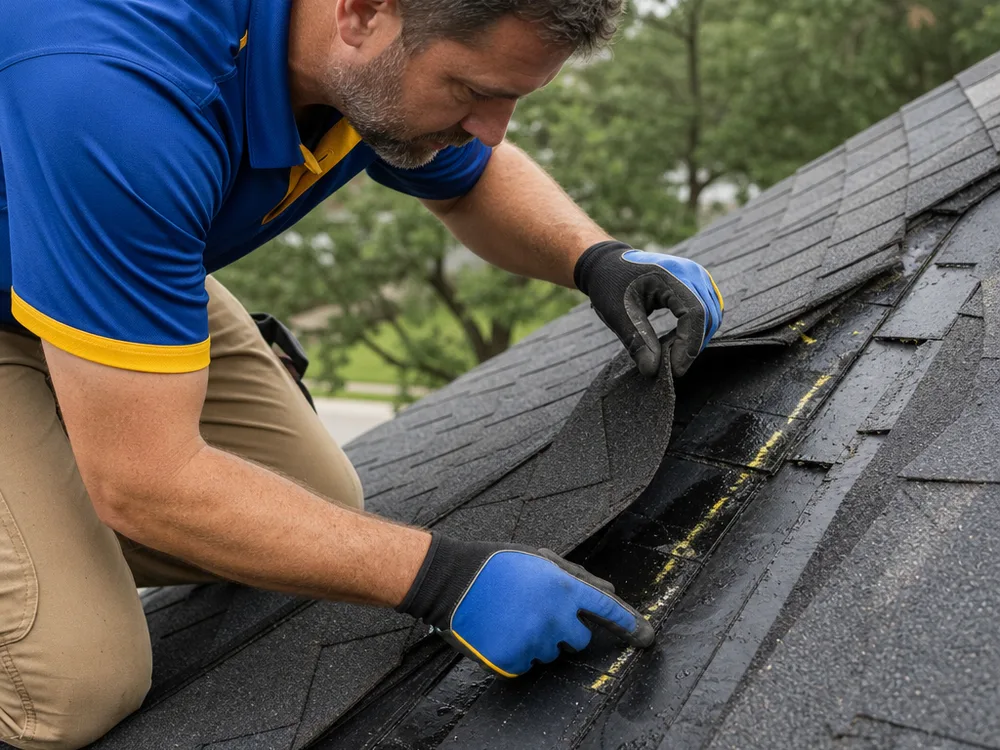
We trace the leak source, not just the interior stain, then stabilize the roof with targeted sealing, shingle replacement, or tarping depending on conditions.
Loose, creased, or missing shingles can let water under the field and expose nails. We secure the area and replace what can be replaced safely without turning a small repair into a larger disturbance.
Many urgent leaks start at roof-to-wall lines, chimneys, skylights, and vents. We repair or temporarily seal the area, then recommend the correct permanent flashing approach.
Branches and wind-borne debris can punch through shingles and underlayment. We remove hazards, patch appropriately, and check surrounding decking for softness.
If the deck is soft, saturated, or compromised, we prioritize making the area weather-tight and then outline the safest method for structural repair.
Jacksonville's storms often bring heavy rain in short bursts plus gusty winds, and that combination finds weak points quickly. Wind can lift shingle edges and break the seal strip; once the bond is compromised, rain can be driven under the shingle courses. That's why emergency repairs frequently focus on perimeter edges, ridges, and roof-to-wall transitions.
Neighborhood layout also changes how emergencies are handled. In Riverside and Avondale, mature trees can increase the chance of limb strikes during storms, so we commonly see punctures and localized deck damage. In San Marco, many homes have complex roof lines and multiple transitions where flashing details matter during heavy rain. Beaches-area homes are exposed to stronger onshore winds, so we pay extra attention to ridge caps, edge metal, and loosened components that can turn into wind-borne debris.
Because active leaks can travel along trusses and decking seams, we may recommend simple interior steps while we're on the way, such as moving valuables and placing catch containers, but the real protection comes from getting the roof dried-in properly. Temporary work should hold long enough to prevent ongoing damage, but it is still temporary. The permanent fix is scheduled as soon as materials and conditions allow.
We prioritize safety, find the true entry point, stabilize the roof, and document what the lasting repair should include.
We confirm what you're seeing—active dripping, missing shingles, or limb impact—and assess access, pitch, and current weather so we don't put people on a roof when it isn't safe.
We inspect the most likely entry locations first: ridges, valleys, penetrations, and roof-to-wall lines. When needed, we check attic conditions to confirm the water path.
We use the right method for the situation: tarp, targeted sealing, small-area shingle replacement, or re-securing loose components to stop water intrusion fast.
You get a clear explanation of what failed, what was done during the emergency visit, and what a permanent repair should include so you can make decisions with confidence.
If the roof needs additional work beyond the emergency stop, we provide a written scope for the lasting repair and schedule it as soon as conditions allow.
Emergency roof repair in Jacksonville typically ranges from about $250 to $1,500+ depending on the urgency, access, and what's required to stop the leak. A straightforward small repair or basic tarping is usually on the lower end, while complex leak tracing, steep or high access, multiple leak points, or localized decking work can push costs higher.
Price depends on roof type, the size of the affected area, whether shingles or flashing can be repaired immediately, and how much temporary protection is needed to withstand wind and rain. Exact pricing is confirmed after an on-site inspection of the damage and safe access conditions.
“We had water coming through a ceiling light after a night of hard rain. The crew found a flashing problem near a vent, sealed it, and installed a tarp over the area until the permanent repair could be scheduled. The dripping stopped the same day.”
“A few shingles blew off and we could see underlayment flapping. They secured the loose pieces and replaced what they could right then, then explained what needed a follow-up once everything dried out.”
It's an emergency when the roof is actively letting water in, has storm damage that can worsen quickly, or has loose components that could blow off. In Jacksonville, wind-driven rain can push water under lifted shingles fast, so missing shingles, torn ridge caps, punctures, and flashing failures usually need same-day stabilization.
Some emergency measures can be done during light rain, but we won't put a crew on a roof during lightning, high winds, or unsafe conditions. In those cases, we focus on the safest immediate steps and return as soon as conditions allow to install a secure tarp or complete the repair.
Yes, tarping is a standard emergency response when the roof needs to be dried-in quickly and a permanent repair can't be completed immediately. A proper emergency tarp is mechanically fastened and positioned to shed water, not just draped over the area.
If the leak source is accessible and conditions are safe, stopping the active leak is often possible during the same visit through targeted sealing, small-area replacement, or tarping. Some leaks require more tracing because the interior stain may be far from the exterior entry point.
Move valuables out of the affected area, place containers to catch dripping, and avoid using any electrical fixtures near active water. If you can safely access the attic, look for dripping to help identify the general area, but don't step on wet drywall or ceiling surfaces.
A good emergency repair is meant to stabilize the roof and prevent continued water intrusion for a reasonable period, but it is not a substitute for the permanent repair. Jacksonville weather can change quickly, so we recommend scheduling the lasting fix as soon as the roof is dry and materials are ready.
The most common causes are flashing failures at vents and roof-to-wall lines, wind-lifted shingles that break the seal strip, punctures from debris, and problems at valleys where water concentrates. A proper inspection focuses on these transitions, not just the shingle field.
Tell us what you're seeing and when it started. We'll prioritize safe, fast stabilization to stop the leak, protect the interior, and outline the next steps for a permanent repair in Jacksonville.